Medisage Medical
Titanium plays a pivotal role in the field of medical implants. Understanding its significance is essential for medical professionals and patients alike. What is the role of titanium in medical implants? Its unique properties make it an ideal choice for various surgical applications. Titanium is lightweight, strong, and highly resistant to corrosion. These features enhance the longevity and durability of implants.
Moreover, titanium is biocompatible, which means it can integrate seamlessly with human tissues. This property helps reduce the risk of rejection after surgery. It is fascinating to see how titanium's applications extend from dental implants to orthopedic devices. However, challenges in working with titanium remain. For instance, ensuring the right surface treatment can be critical for its success in different medical applications.
Despite its advantages, the nuances of titanium's role require careful consideration. Misunderstandings about its use can lead to complications. Thus, continuous research and education are necessary to maximize its benefits in medicine. This article will delve into the top five roles of titanium in medical implants, offering deeper insights and practical knowledge.
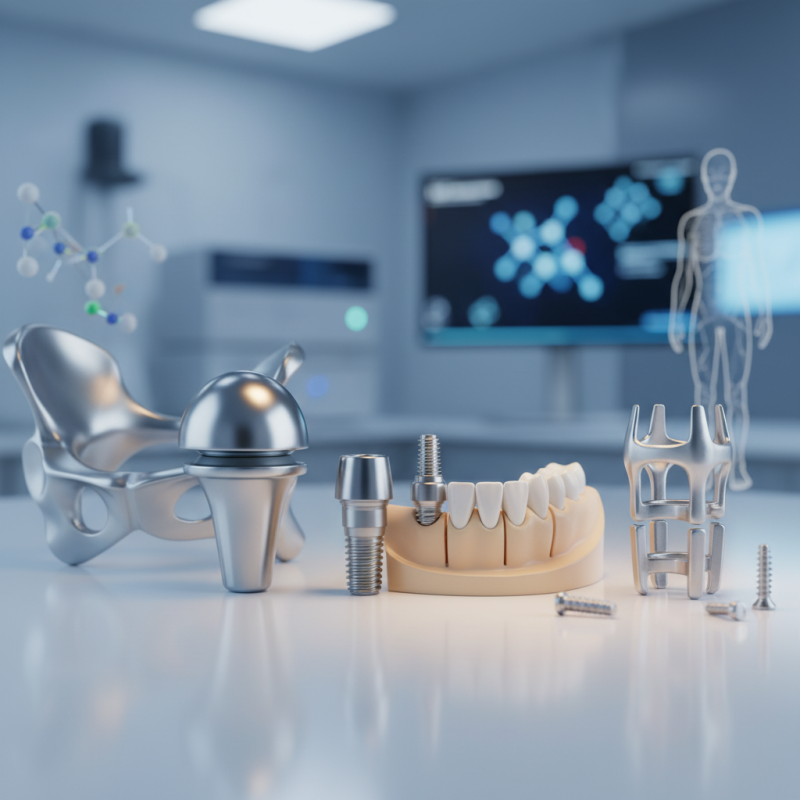
Titanium has become crucial in the field of medical implants. A key reason is its biocompatibility. This property ensures that titanium interacts safely with human tissues. The body does not reject titanium, which is vital for the success of implants. Results have shown that titanium integrates well into bone, promoting healing.
Not all titanium alloys are equally biocompatible. Some may contain impurities that could lead to adverse reactions. Continuous research is necessary to understand these nuances fully. Scientists are investigating how the surface properties of titanium can enhance its compatibility. A smoother surface may reduce inflammation and improve osseointegration.
Challenges still exist in titanium’s use in medical implants. There are concerns about its wear resistance over time. Understanding these aspects is essential. Every detail can have significant implications. Future developments may lead to even better materials, which could improve patient outcomes. The journey toward perfecting titanium implants continues.
| Role | Description | Biocompatibility |
|---|---|---|
| 1. Structural Support | Titanium provides high strength-to-weight ratio, essential for load-bearing implants. | Highly biocompatible; minimal immune response. |
| 2. Corrosion Resistance | Resistant to corrosion from bodily fluids, increasing the lifespan of implants. | Low risk of adverse reactions due to corrosion products. |
| 3. Osseointegration | Titanium facilitates bone integration, enhancing stability of implants. | Promotes bone cell adhesion and growth. |
| 4. Lightweight Properties | Lightweight material reduces overall weight of implants, increasing patient comfort. | Delivers comfort with no compromise on strength. |
| 5. Versatility | Can be used in various types of implants including dental, orthopedic, and cardiovascular. | Wide-ranging applications with proven safety profiles. |
Titanium alloys play a crucial role in the effectiveness of medical implants, primarily due to their corrosion-resistant properties. The human body is a complex environment, and implants must withstand various fluids and conditions. According to a report by the National Institute of Standards and Technology, the corrosion resistance of titanium alloys is exceptional, with corrosion rates significantly lower than that of stainless steel. This makes titanium a preferred choice for long-term implantation.
The formation of a passive oxide layer on titanium surfaces enhances its bio-compatibility and reduces the risk of adverse reactions. Research shows that titanium can resist localized corrosion, a common issue with metallic implants. The oxide layer can heal itself upon damage, which adds to its durability. Despite these advantages, titanium is not immune to all forms of corrosion. There are instances where galvanic corrosion occurs, particularly when titanium is used with dissimilar metals in the body.
In some cases, the mechanical strength of titanium alloys may become compromised due to wear or corrosion over time. According to material experts, understanding these limitations is vital for the design of safer implants. Continuous advancements in alloy compositions aim to enhance both strength and corrosion resistance. While titanium remains a benchmark in implant technology, ongoing research is essential to address its vulnerabilities.
Titanium plays a crucial role in medical implants, largely due to its unique combination of weight and strength. It is significantly lighter than most metals, which reduces the overall burden on the body. This lightweight property makes titanium ideal for various implants, such as hip or knee replacements, providing comfort and ease of movement post-surgery. Additionally, titanium boasts high strength, meaning it can withstand the stresses and strains of daily activities without fracturing.
Using titanium in healthcare also reduces the risk of complications. Its biocompatibility minimizes the chances of rejection by the body, promoting better healing. Moreover, titanium's resistance to corrosion increases the lifespan of implants. However, this impressive material can present challenges in fabrication. Specialized techniques are often needed to shape titanium effectively for complex implant designs.
**Tip:** Always consult a medical professional about implant material options. Each patient is unique, and a personalized approach is essential.
Careful consideration of titanium's properties can lead to innovative solutions in medical device engineering. Despite its advantages, there are ongoing discussions about improving cost-efficiency in titanium production. Exploring alternatives while maintaining the benefits of strength and weight remains a topic worth reflecting on.
**Tip:** Investigate the latest research on titanium applications. Staying informed can lead to better healthcare outcomes.
Titanium plays a crucial role in enhancing the longevity and reliability of medical implants. Its unique properties make it an ideal choice for various surgical applications. Titanium is both lightweight and incredibly strong. This strength ensures that implants can withstand daily wear and tear in the human body.
Corrosion resistance is another significant factor. Titanium does not react adversely with bodily fluids. This characteristic helps prevent implant failure, which can be a major concern in prolonged use. Moreover, titanium supports osseointegration. This process allows bone cells to grow around the implant. A strong bond is formed, leading to improved stability.
However, titanium is not without its challenges. Its biocompatibility, while generally excellent, can vary among individuals. Some patients may experience allergic reactions or complications. Ongoing research is necessary to address these concerns and improve titanium’s performance in medical implants. The need for continuous improvement highlights the complexity of creating reliable surgical solutions.
Titanium implants are essential in modern medicine due to their biocompatibility and strength. The effectiveness of these implants is significantly influenced by surface treatment techniques. Recent studies reveal that surface modifications can enhance osseointegration, leading to better implant stability and longevity. For instance, roughened surfaces allow for increased bone contact, with reports indicating up to 30% improvement in integration rates.
Surface treatments like sandblasting and acid etching create a microstructure that encourages cell attachment. A report from the Journal of Biomedical Materials Research highlights that titanium implants with treated surfaces showed a significant increase in cell proliferation compared to untreated ones. However, not all treatments yield the same results. The potential for corrosion is a concern, leading to questions about long-term reliability.
Tip: Assess the treatment type when choosing titanium implants for specific applications. Understanding the implications of roughness and hydrophilicity can guide optimal implant selection.
Another noteworthy aspect is the possible trade-offs between surface energy and bioactivity. While some treatments improve bonding, they may also attract contaminants. Choosing an implant with the right balance remains critical. Remember to evaluate both short-term and long-term outcomes as part of your decision-making process.
This chart illustrates the top five roles of titanium in medical implants, highlighting their importance in various applications within the medical field.
: Titanium's biocompatibility allows safe interaction with human tissues, preventing rejection.
No, some alloys may contain impurities that cause adverse reactions.
A smoother surface can reduce inflammation and improve integration with bone.
Titanium is significantly lighter than many metals, reducing the overall burden on the body.
Its high strength allows it to withstand daily stresses without fracturing.
Specialized techniques may be needed to shape titanium for complex designs.
Treatments like sandblasting enhance cell attachment, potentially increasing integration rates.
Some treatments may lead to corrosion, affecting long-term reliability.
Patients should evaluate the treatment type and its implications on implant effectiveness.
Ongoing discussions focus on improving cost-efficiency while maintaining material benefits.
In exploring what is the role of titanium in medical implants, we uncover its critical contributions to modern healthcare technology. Titanium's biocompatibility ensures that it integrates well with human tissues, minimizing the risk of adverse reactions. Additionally, the corrosion resistance properties of titanium alloys extend the lifespan of implants, making them ideal for long-term use in the body.
The weight and strength advantages of titanium further enhance its utility, allowing for durable yet lightweight implants. Moreover, titanium plays a significant role in enhancing implant longevity and reliability, which is crucial for patient outcomes. Finally, advancements in surface treatment techniques improve the osseointegration of titanium implants, further solidifying its position as a material of choice in the field of medical devices. Overall, the multifaceted advantages of titanium make it indispensable in the realm of medical implants.
